
Start anytime, for free. Click any module below to begin—your first click creates a free account so your progress saves.
OrthoSCORER
Student Curriculum for Orthopedic Resident Education Readiness
A 4-week primer for medical students preparing for orthopedic sub-internships and residency applications. Free. Open enrollment. Start anytime.
ABOUT THE COURSE
OrthoSCORER is a structured four-week online curriculum that prepares medical students for the demands of an orthopedic sub-internship and the orthopedic residency application year. The course covers foundational orthopedic science, fractures and bone pathology, joints and sports medicine, and the practical realities of applying to orthopedic surgery—all in roughly 45 to 60 minutes a day, Monday through Friday.
The curriculum is built around evidence-based learning principles. Every day combines thorough and high-yield lecture slides with short quizzes integrating content from earlier in the course. A separate longitudinal radiograph-reading track runs through all twenty days, training students to read and present films in the same structured language they will be expected to use on rounds.
WHO IT'S FOR
OrthoSCORER is designed for medical students preparing orthopedic surgery rotations, particularly fourth-year students preparing sub-internship rotations at programs they are interested in for residency application. It is also useful for third-year students considering orthopedics who want a focused introduction to the field. No prior orthopedic experience is required.
WHAT YOU WILL LEARN
What You Will Learn
By the end of OrthoSCORER, students will be able to:
Apply foundational orthopedic principles — bone biology, biomechanics, soft tissue healing, regional anatomy, and a structured radiograph-reading framework — to clinical scenarios. (Week 1)
Classify and triage common adult and pediatric fractures across the upper and lower extremity. (Week 2)
Differentiate common bone, joint, and cartilage pathology, and perform the regional workup of the major joints, hand, and foot. (Week 3)
Outline the principles of arthroplasty, arthroscopy, and spine; recognize orthopedic emergencies; and build a personal residency-application strategy. (Week 4)
Course Structure
The course runs four weeks, Monday through Friday, with a target time commitment of 45 to 60 minutes per day.
Week 1 — OrthoBASICS: Foundational Sciences. Bone biology and remodeling, biomechanics fundamentals, soft tissue healing, regional musculoskeletal anatomy, and a structured framework for reading radiographs.
Week 2 — OrthoBONES: Fractures. Fracture biology and classification systems, upper extremity fractures, lower extremity fractures from pelvis to foot, and pediatric and physeal injuries.
Week 3 — OrthoJOINTS: Joint and Bone Pathology. Bone pathology including osteoporosis, infection, and tumors; inflammatory, degenerative, and crystalline arthritis; and the regional workup of the shoulder, elbow, hip, knee, hand, and foot.
Week 4 — OrthoADVANCED: Operative Principles, Emergencies, and the Application Year. Arthroplasty, arthroscopy, and sports principles; advanced arthroplasty (revision, infection, periprosthetic fracture); spine; orthopedic emergencies; and the residency-application timeline and sub-internship readiness. Cumulative musculoskeletal review is built into each day.
HOW IT WORKS
Each day follows the same template: the day's lecture presentation, a radiograph-reading presentation, and a daily quiz. The quiz draws not only on the current day but also on the prior day and content from earlier in the course, so spaced retrieval keeps every concept in active rotation across the full four weeks.
The radiograph track is longitudinal. It begins with introducing standard radiographic views over the first week, followed by three weeks of injury films capturing the most common orthopedic injuries. The goal is to train you to read radiographs proficiently and provide a formal radiographic interpretation in the structured language attendings expect on rounds.
Ready to start? Click any module below. No login needed—your first click sets up a free account and opens the lesson.
-
OrthoBASICS – Learn the basics, from bench science to bone surgery
-
Day 1: Bone Biology & Remodeling
The cells, matrix, and remodeling cycle behind every fracture, implant, and healing bone. The foundation the rest of the course builds on.
-
Day 2: Biomechanics
Stress, strain, and load-sharing. The mechanical vocabulary that explains fracture patterns and why implants are built the way they are.
-
Day 3: Soft Tissue Healing
How tendon, ligament, cartilage, and muscle heal, and why some barely do. The biology behind sprains, cartilage lesions, and tendon injuries.
-
Day 4: MSK Regional Anatomy
Introduction to orthopedic anatomy
-
Day 5: Imaging & Radiograph Reading
A systematic framework for reading films, choosing the right modality, and avoiding the classic single-view misses.
-
-
OrthoBONES – Short bones, long bones, flat bones, strong bones
-
Day 6: Fracture Biology & Classification
How fractures heal, how we describe and classify them, and how the implant dictates the healing pathway.
-
Day 7: Upper Extremity Fractures
Clavicle to hand: the high-yield injuries, their eponyms, the structures at risk, and the operative-versus-nonoperative call.
-
Day 8: Lower Extremity Fractures 1: Pelvis & Femur
Clavicle to hand: the high-yield injuries, their eponyms, the structures at risk, and the operative-versus-nonoperative call.
-
Day 9: Lower Extremity Fractures 2: Knee & Below
Distal femur to foot: plateau, tibial shaft, the ankle frameworks, and the injuries that quietly threaten the limb.
-
Day 10: Pediatric Bone, Physeal & Hip Conditions
Why children's fractures behave differently. Salter-Harris, supracondylar, SCFE, DDH, and the time-sensitive can't-miss patterns.
-
-
OrthoJOINTS – Repair, reconstruct, remember
-
Day 11: Bone Pathology
When disease, not trauma, is the problem: osteoporosis, the suspicious bone lesion, and bone and joint infection.
-
Day 12: Arthritis & Cartilage Pathology
The worn, inflamed, and infected joint, plus the cartilage-lesion framework that recurs across later regional lessons.
-
Day 13: Shoulder & Elbow
The exams and pathology that localize shoulder and elbow pain, from rotator cuff and instability to the thrower's UCL.
-
Day 14: Hip & Knee
Two of the busiest joints: separating hip from spine pain, the knee ligament exams, and the major injuries you'll see on rounds.
-
Day 15: Arthroplasty, Arthroscopy & Sports
The operating-room side of orthopedics: joint replacement, arthroscopy, and the surgical cartilage-repair toolkit.
-
-
Week 4 — OrthoADVANCED: Operative Principles, Emergencies, and the Application Year.
-
All Lectures
Meet your instructors
✳
Meet your instructors ✳
PGY-5
AC
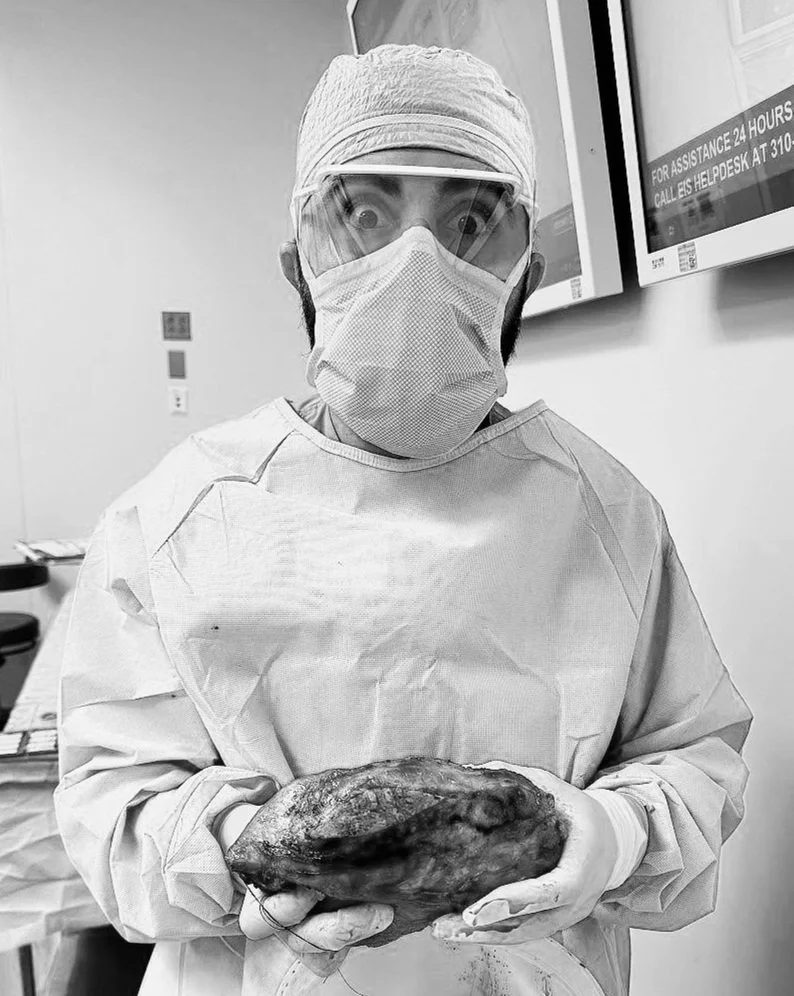
With 8 years of commitment to medical education thus far, I now split my professional time between two primary goals: (1) becoming the best orthopedic surgeon I can be for my future patients, and (2) striving to play my part in improving medical education. As a current orthopedic surgery resident, my passion for the latter has taken form in a few ways, and this course is just one of them. I remain forever open to any feedback or suggestions for improvement, so please do not hesitate to reach out if we can make this page better in any way.
Course FAQ
-
OrthoSCORER course is completely free of charge. We are dedicated to making high-quality orthopedic education accessible to all medical students preparing for residency. There are no fees or hidden costs associated with enrolling in the course, accessing the materials, or utilizing any of the provided resources.
-
The OrthoSCORER course is designed to fit seamlessly into your busy schedule. You will need to dedicate approximately 45-60 minutes each day from Monday to Friday over a four-week period. This amounts to about 5 hours per week. The course materials are accessible online, allowing you to engage with the content at your convenience, whether in the evening or at another time that suits you.
-
No prior orthopedic-specific knowledge is required to enroll in OrthoSCORER. The course is structured to start with foundational concepts in Week 1: OrthoBASICS, progressively building up to more advanced topics in subsequent weeks. It is suitable for all medical students interested in preparing for orthopedic residency, regardless of their previous exposure to orthopedics.
-
All course materials are accessible online through our dedicated OrthoSCORER page. The platform is user-friendly and compatible with both desktop and mobile devices, including smartphones and tablets. This flexibility allows you to access the lecture presentations, radiograph-reading sets, and daily quizzes anytime and anywhere, fitting your study around clinical rotations and personal commitments.
-
All twenty days are accessible from the start. The course is designed to be completed at one day per weekday over four weeks; the spaced retrieval design and longitudinal radiograph track work best when followed in order, but you can move at your own pace.